Sign in


Create an account
Registration has been disabled.
Lost Password?
Enter your email address and we'll send you a new password..
If remembered password go back to login.


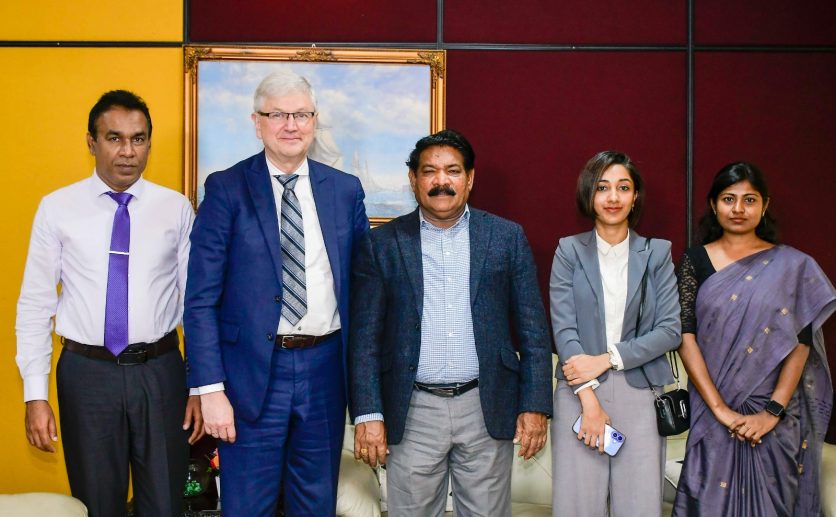
Sri Lanka is taking a strategic step toward aligning its ocean economy with its clean energy ambitions following high-level discussions between the Minister of Fisheries, Aquatic and Ocean Resources, Hon. Ramalingam Chandrasekar, and Norway’s Honorary Consul in Bergen–Vestland, Sturle Harald Pedersen.
The meeting, attended by Secretary to the Ministry Dr. B.K.K. Kolita Kamap Jinadasa and senior officials, focused on strengthening collaboration between Sri Lanka and Norway across fisheries, marine innovation, and sustainable ocean resource management.
The engagement reflects a broader shift toward integrating the country’s blue economy with its renewable energy transition—an area of growing global importance.
The discussions highlighted practical pathways to modernise Sri Lanka’s fisheries sector while safeguarding marine ecosystems.
Advancing marine research and data-driven fisheries management
Promoting sustainable fishing practices to protect ocean resources
Modernising fishing fleets and port infrastructure
Introducing digital and technological innovation into maritime operations
Norway’s experience in ocean industries and maritime technology presents strong opportunities for knowledge transfer and long-term collaboration.
While fisheries remained central to the discussions, the meeting also underscored the growing connection between ocean-based industries and clean energy systems.
Ports, shipping, and coastal infrastructure are increasingly seen as entry points for future hydrogen applications and renewable energy integration.
Adoption of low-emission fuels in maritime transport
Integration of renewable energy into port operations
Development of coastal energy hubs for future export markets
This convergence reflects a global trend where ocean economies play a critical role in enabling decarbonisation.
Greenstat continues to support Sri Lanka’s transition to a low-carbon economy through its work in hydrogen and renewable energy development.
Key contributions include:
Conducting feasibility studies for green hydrogen and biomass-to-energy solutions
Supporting government stakeholders and Education
Driving capacity building through the Greenstat Centre of Excellence
These efforts aim to build a strong foundation for a future hydrogen ecosystem while supporting national development priorities.
A key outcome of the meeting was the shared interest in expanding public–private partnerships and attracting strategic investments into the sector.
Cleaner and more efficient fishing fleets
Smart and sustainable port infrastructure
Marine technology and ocean data systems
Such investments are expected to enhance productivity, reduce environmental impact, and improve resilience across coastal communities.
The long-term success of these initiatives will depend on strengthening local expertise and institutional capacity.
The discussions emphasised:
Expanding training programmes in fisheries and maritime sectors
Strengthening collaboration between Sri Lankan and international universities
Facilitating knowledge transfer in clean energy and ocean technologies
This aligns with ongoing efforts to equip Sri Lanka’s workforce with the skills needed for both the blue economy and the energy transition.
The outcomes of this engagement reinforce Sri Lanka’s positioning at the intersection of ocean-based growth and clean energy transformation.
Greater alignment between fisheries modernisation and sustainable energy goals
Increased attractiveness for international investors and development partners
Opportunities to develop export-oriented, low-carbon industries
Strengthened resilience in both energy and food systems
As global energy systems evolve, countries that successfully integrate natural resources with clean technologies are likely to gain a competitive advantage.
The meeting marks an important step in deepening Sri Lanka–Norway cooperation across fisheries, maritime innovation, and sustainable energy development.
Continued collaboration between government, academia, and industry will be critical to unlocking the full potential of Sri Lanka’s ocean resources while supporting its transition to a resilient, low-carbon economy.
👉 Learn more about our past webinars here
👉 Explore our projects in Sri Lanka
Stay connected with Greenstat for updates:
Sri Lanka’s future lies in its ability to connect its natural strengths with emerging technologies—and partnerships like these are key to making that vision a reality.
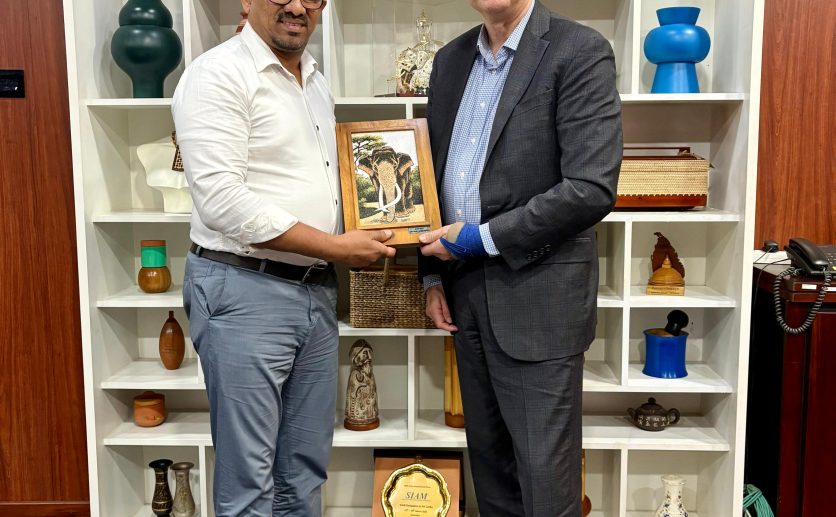
Greenstat Asia recently held a high-level meeting with Hon. Sunil Handunneththi, Minister of Industry and Entrepreneurship Development, to discuss opportunities to strengthen cooperation between Sri Lanka and Norway in green industry, renewable energy, and hydrogen development.
The meeting, held at the Ministry of Industry on 19 January 2026, brought together Minister Handunneththi, Sturle H. Pedersen, Honorary Consul of Sri Lanka in Norway and Chairman of Greenstat Asia, and Prasadini Wickramasinghe, Coordinator of the Greenstat Centre of Excellence in Hydrogen (COE-H). The discussion focused on identifying practical pathways to accelerate Sri Lanka’s energy transition while attracting sustainable industrial investment.
During the dialogue, both sides emphasised the strong potential for deeper collaboration between Norwegian clean-energy expertise and Sri Lanka’s growing interest in building a competitive green industrial ecosystem.
A key focus of the discussion was the role of green hydrogen in Sri Lanka’s long-term decarbonisation strategy.
Participants explored how emerging technologies such as hydrogen, green fuels, and advanced biomass solutions could support the development of new industries while reducing emissions in sectors such as transport, manufacturing, and heavy industry.
Greenstat Asia highlighted opportunities to utilise biomass residues and organic waste streams to produce clean energy carriers such as hydrogen and synthetic fuels. These solutions can contribute to a circular economy approach, turning agricultural and organic waste into valuable energy resources while supporting energy security and sustainable growth.
The meeting also reaffirmed the importance of establishing a supportive policy environment, infrastructure readiness, and clear regulatory frameworks to encourage early investment in hydrogen and green fuels.
The discussion underlined the importance of international partnerships in advancing Sri Lanka’s renewable energy ambitions.
Collaboration between governments, industry stakeholders, and research institutions will be essential to develop pilot projects, attract investors, and scale new technologies in the country.
Another important element raised during the meeting was the need to strengthen renewable energy education and workforce development. Building local technical expertise in hydrogen systems, safety standards, and advanced energy technologies will be critical to ensuring that future projects can be safely implemented and operated by a skilled domestic workforce.
Through initiatives such as the Greenstat Centre of Excellence in Hydrogen (COE-H), Greenstat Asia continues to support knowledge-sharing, professional training, and industry dialogue aimed at strengthening the regional hydrogen ecosystem.
Greenstat Asia is actively working with public and private sector partners to support Sri Lanka’s transition toward renewable energy, industrial decarbonisation, and clean fuel development.
The organisation contributes through feasibility studies, pilot initiatives, training programmes, and partnerships that help connect international technology expertise with local opportunities in Sri Lanka’s emerging green economy.
The meeting concluded with a shared commitment to deepen cooperation between Sri Lanka and Norway in advancing green hydrogen development, clean industrial innovation, and sustainable investment opportunities.
As global demand for low-carbon energy solutions continues to grow, initiatives such as these can play an important role in positioning Sri Lanka as a future hub for green industry and renewable energy development in Asia.
For updates on Greenstat’s work in green hydrogen in Sri Lanka, renewable energy education, and hydrogen partnerships, follow Greenstat on LinkedIn and the YouTube channel.
Learn more about our webinars here


