Sign in


Create an account
Registration has been disabled.
Lost Password?
Enter your email address and we'll send you a new password..
If remembered password go back to login.


29 SEP 2025
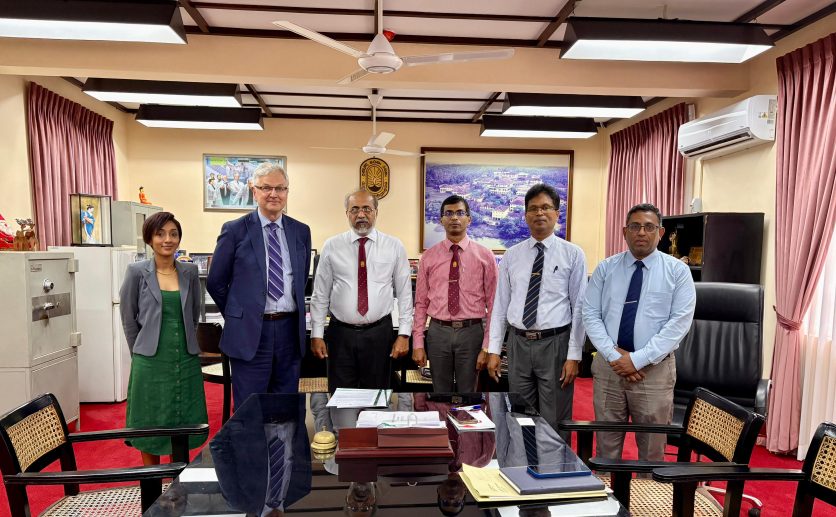
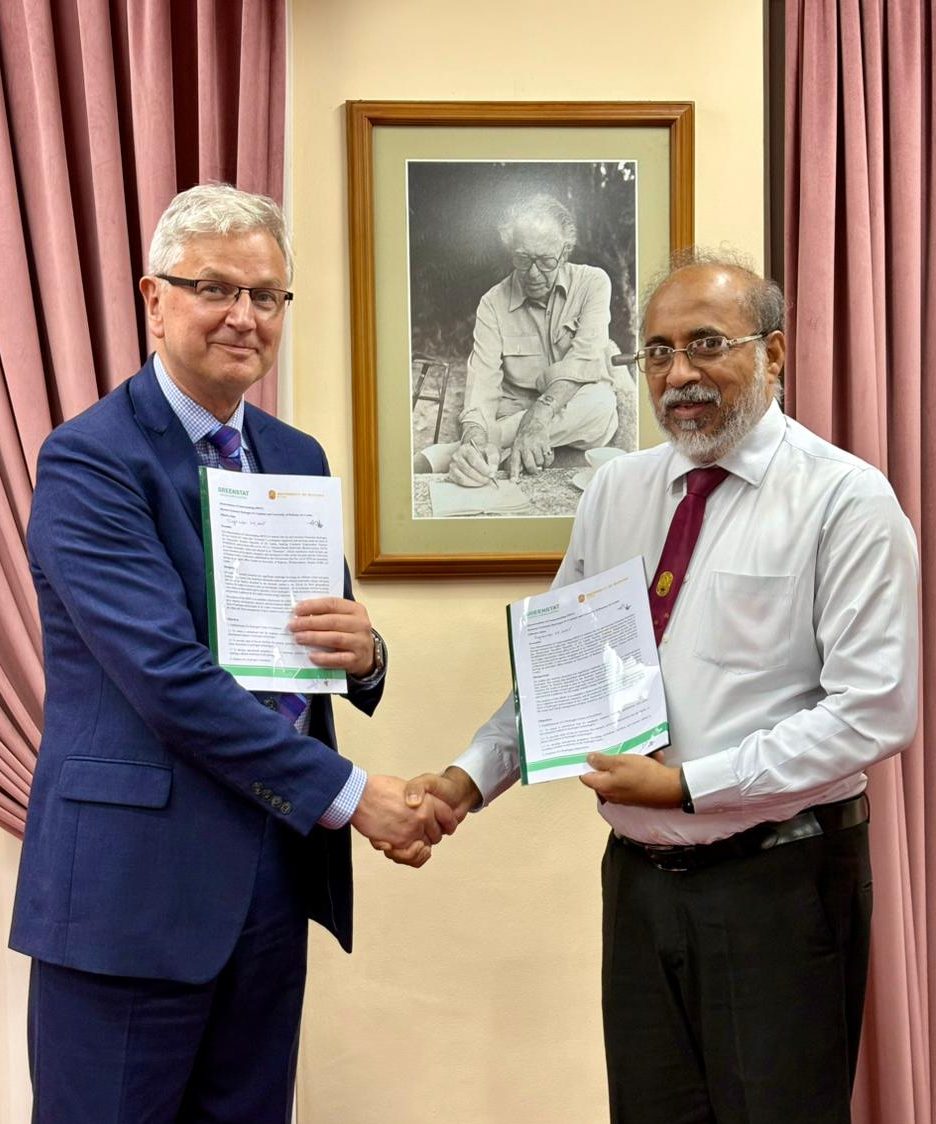
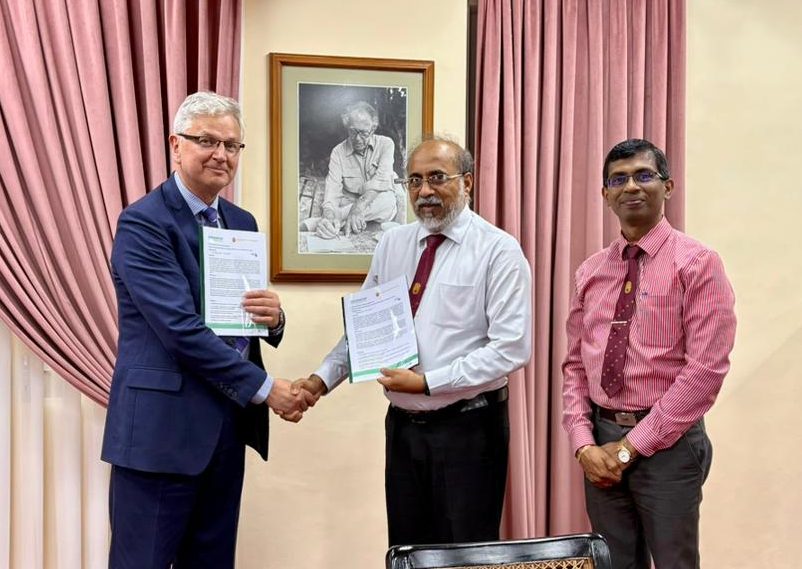
University of Ruhuna and Greenstat Hydrogen have signed a Memorandum of Understanding (MoU) to establish a framework for cooperation in hydrogen research, innovation, and capacity development. The agreement aims to strengthen academia–industry collaboration and position Sri Lanka as an active player in the regional green hydrogen economy.
The MoU will support joint initiatives to expand hydrogen education, advance research and development, and create opportunities for students and academics to participate in applied hydrogen projects. By combining academic expertise with industry knowledge, the partnership seeks to build a skilled workforce and accelerate Sri Lanka’s transition to sustainable energy.
The signing ceremony was attended by Senior Professor P.A. Jayantha, Vice Chancellor of the University of Ruhuna, together with Professor H.C.P. Karunasena, Dean of the Faculty of Engineering, Eng. Veditha De Silva, DMENA, Faculty of Engineering and Dr Sumith Baduge, Head of the Department of Marine Engineering & Naval Architecture. Greenstat Hydrogen was represented by Chairman Sturle H. Pedersen and Prasadini Wickramasinghe.

Organized by the Greenstat Center of Excellence for Hydrogen (COE-H) in collaboration with Enapter, this exclusive webinar explores how green hydrogen production, microgrids, and advanced software for energy systems are unlocking new pathways to a sustainable, net zero emissions future.
🎤 Speaker: Sebastian-Justus Schmidt, Founder of Enapter and pioneer of modular Anion Exchange Membrane (AEM) electrolyzers.
In this session, Sebastian shares Enapter’s groundbreaking approach to electrolysis and demonstrates how modular electrolyzers can be scaled to power smart hydrogen microgrids. He explains how intelligent software enables real-time monitoring, predictive maintenance, and seamless integration of hydrogen into decentralized energy systems.
With case studies from Enapter’s global projects, including long-running demonstration platforms like the Phi Suea House in Thailand, this webinar provides practical insights into how hydrogen can replace diesel gensets, support rural electrification, and build resilient, flexible microgrids worldwide.
Gain a clear understanding of the role of green hydrogen in the global renewable energy transition.
Discover how microgrids powered by hydrogen can deliver energy independence and climate resilience.
Learn how modular electrolyzers reduce costs and accelerate capacity building.
See how software-driven energy management transforms complex systems into efficient, reliable clean energy solutions.
Explore opportunities for South Asia and other emerging markets in the global hydrogen economy.
📌 Watch the recording now and gain expert insights into how Enapter’s modular electrolyzers and hydrogen-powered microgrids can drive the global clean energy transition.
Explore our past Greenstat COE-H Webinars featuring global experts in green hydrogen, renewable energy, and net zero strategies.
👉 Click here to watch past webinars

How can regions collaborate to accelerate the global clean energy transition and achieve net-zero emissions?
This exclusive webinar, hosted by the Greenstat Center of Excellence for Hydrogen (COE-H), features insights from the United Nations Industrial Development Organization (UNIDO) and its Global Network of Regional Sustainable Energy Centres (GN-SEC). Launched in 2010, GN-SEC has become a pioneering platform that empowers countries across Africa, the Arab region, Asia-Pacific, Latin America, and Central Asia to drive regional collaboration on renewable energy, green hydrogen, and sustainable innovation.
🎤 Keynote Speaker
Andrea Eras Almeida – Renewable Energy Expert at UNIDO, with over 15 years of experience in renewable energy, climate innovation, and energy efficiency. Andrea shared how GN-SEC bridges the gap between international climate agreements and national implementation, fostering policy harmonisation, capacity building, technology transfer, and green jobs.
Understand the GN-SEC framework for regional clean energy cooperation.
Learn from case studies in Africa, Asia-Pacific, and Latin America.
Discover UNIDO’s multi-stakeholder approach through South-South and triangular cooperation.
Explore GN-SEC’s virtual maker-space model, driving capacity building, project development, and innovation.
See how Sri Lanka and other developing nations can leverage GN-SEC to advance their net-zero energy transition goals.
The GN-SEC initiative is a bold step in global capacity building for renewable energy and green hydrogen solutions. By harmonising policies, strengthening technical expertise, and mobilising investment, GN-SEC enables developing nations to pursue net-zero pathways, inclusive growth, and a just energy transition.
👉 Watch the full webinar recording now to learn how your country, institution, or business can partner with UNIDO’s GN-SEC and become part of the global clean energy community working towards sustainable, carbon-neutral futures.
Watch the full webinar recording now
🔔 Don’t forget to Like, Comment, and Subscribe for more thought-provoking webinars.
Explore our past Greenstat COE-H Webinars featuring global experts in green hydrogen, renewable energy, and net zero strategies.
👉 Click here to watch past webinars

On 14 August 2025, the Greenstat Centre of Excellence in Hydrogen (COE-H) had the honour of hosting Professor Sir Jim Skea CBE FRSE FEI HonFSE, Chair of the Intergovernmental Panel on Climate Change (IPCC), for an exclusive session on the state of global climate science and the path ahead.
About the Webinar
The IPCC plays a central role in shaping global climate policy by providing rigorous, science-based assessments of climate change. In this webinar, Professor Skea unpacked the key findings of the IPCC Sixth Assessment Report, explained their direct relevance to the Paris Agreement goals, and highlighted knowledge gaps that must be urgently addressed. He also shared insights into the Seventh Assessment Cycle, setting the stage for the next decade of global climate collaboration.
Key Takeaways
What the IPCC is and how it works.
Key findings from the Sixth Assessment Report critical for achieving net zero emissions and the Paris Agreement.
Where global climate knowledge gaps remain and how they can be addressed.
Plans and priorities for the Seventh Assessment Cycle.
One of the most striking points shared:
“To stay below 1.5°C, global emissions should have been halved during the 2020s. That hasn’t happened. This means 1.5°C is now almost out of reach. Even keeping warming under 2°C will require drastic action in the next decade.”
This urgent message reinforces that every fraction of a degree matters. Beyond 2°C, we face irreversible risks to coral reefs, forests, food security, and future generations.
Why Watch the Replay?
If you are a researcher, policymaker, or clean energy professional working in fields such as green hydrogen, energy transition, and capacity building for net zero emissions, this is a must-watch session. Professor Skea’s decades of leadership in energy innovation, just transition frameworks, and international climate policy offer unique insights to guide today’s action.
Watch the full recording now and join the global conversation on building a just, inclusive, and sustainable energy future.

In a key dialogue on Sri Lanka’s renewable energy future, Greenstat Asia Chairman Sturle Harald Pedersen met with the Honourable Prime Minister and Minister of Education, Harini Amarasuriya, to explore long-term collaboration in green hydrogen education, research, and capacity building.
The discussion focused on strengthening institutional partnerships to advance Sri Lanka’s hydrogen roadmap, combining international expertise with local innovation.
Also present at the meeting were Nalaka Kaluwewe, Secretary to the Ministry of Education, and Prasadini Wickramasinghe, Coordinator of the Greenstat Centre of Excellence for Hydrogen (COE-H) in Sri Lanka.
Mr. Pedersen outlined Greenstat’s mission to support Sri Lanka’s clean energy goals and shared recent progress in developing a national ecosystem for hydrogen research and knowledge exchange.
Greenstat is collaborating with Sri Lankan universities to launch the country’s first Master’s programme in green hydrogen. A Memorandum of Understanding (MoU) has already been signed with the University of Peradeniya, with further agreements underway with the University of Moratuwa, University of Jaffna, and University of Ruhuna.
Through the COE-H, Greenstat is integrating advanced software tools such as EFFECTS and RISKCURVES into university curricula. These tools are essential for training students in process safety, consequence modelling, and risk assessment in hydrogen production and storage.
Beyond academic collaboration, Greenstat’s initiatives focus on creating a skilled workforce and raising public awareness on green hydrogen.
The COE-H conducts free webinars covering various segments of the hydrogen value chain, offering knowledge-sharing opportunities for students, professionals, and policymakers.
In partnership with Midwest Energy, Greenstat Hydrogen Sri Lanka is piloting a hydrogen-electric boat project in the Bentota estuary. The initiative aims to decarbonise inland water transport in tourism and fisheries sectors by replacing ageing diesel vessels with clean, quiet electric alternatives—protecting ecosystems and improving visitor experience.
During the meeting, Prime Minister Amarasuriya acknowledged Greenstat’s commitment to sustainable development and expressed interest in expanding hydrogen-related content in technical and vocational education. Emphasis was placed on aligning curriculum development with global energy transition trends and preparing youth for emerging green jobs.
“We envision the Centre of Excellence as a national platform for international collaboration—from research partnerships to skills development,” said Mr. Sturle Pedersen, Chairman of Greenstat Asia and Honorary Consul of Sri Lanka in Bergen–Vestland. “We are grateful for the Ministry’s support in shaping a workforce ready to power a hydrogen-driven future.”
Greenstat Hydrogen Sri Lanka is a knowledge and innovation partner in the country’s hydrogen ecosystem, working with academic institutions, government agencies, and industry to accelerate Sri Lanka’s transition to a low-carbon economy. The company supports the entire hydrogen value chain—from feasibility studies and technology integration to project execution and investment facilitation.
By enabling international-local partnerships, providing cutting-edge tools, and promoting sustainable infrastructure, Greenstat is helping to shape Sri Lanka’s role as a regional leader in hydrogen innovation.
Greenstat Hydrogen Sri Lanka invites all stakeholders to join its mission of creating clean energy solutions and green job opportunities.

Catch the recording of this insightful webinar featuring Tor Kristian Haldorsen, Lead Advisor at the Norwegian Hydrogen Forum (NHF). With nearly a century of industrial hydrogen production experience, Norway stands at the forefront of the global hydrogen market. Learn how Norway’s innovative policies and safety measures are shaping the hydrogen economy and leading the energy transition.
✅ Key Hydrogen Projects: Overview of more than 200 hydrogen initiatives, including production, research, and technology pilots.
✅ Applications in Hard-to-Abate Sectors: Insights into hydrogen use in shipping, aviation, construction, and heavy-duty transport.
✅ Policies and Support Schemes: Understand how Norway’s policies drive the hydrogen value chain and develop new markets.
✅ Safety and Collaboration: Explore best practices for ensuring safe hydrogen handling and fostering cooperation between industry and government.
Tor Kristian Haldorsen is a seasoned expert in hydrogen policy and international collaboration. As Lead Advisor at the Norwegian Hydrogen Forum, he represents stakeholders across the hydrogen value chain. Tor Kristian has held key roles at Innovation Norway and the German-Norwegian Chamber of Commerce and holds advanced degrees in political science and comparative politics.
Get a behind-the-scenes look at how Norway’s strategies and policies can serve as a model for global hydrogen development. Whether you’re in energy, policy, or business, this webinar offers valuable insights into creating sustainable hydrogen ecosystems.
📺 Watch the recording now and see how Norway is driving the future of hydrogen!
👉 Don’t forget to Like, Comment, and Subscribe for more expert content on hydrogen development and the global energy transition.

