Sign in


Create an account
Registration has been disabled.
Lost Password?
Enter your email address and we'll send you a new password..
If remembered password go back to login.


How can regions collaborate to accelerate the global clean energy transition and achieve net-zero emissions?
This exclusive webinar, hosted by the Greenstat Center of Excellence for Hydrogen (COE-H), features insights from the United Nations Industrial Development Organization (UNIDO) and its Global Network of Regional Sustainable Energy Centres (GN-SEC). Launched in 2010, GN-SEC has become a pioneering platform that empowers countries across Africa, the Arab region, Asia-Pacific, Latin America, and Central Asia to drive regional collaboration on renewable energy, green hydrogen, and sustainable innovation.
🎤 Keynote Speaker
Andrea Eras Almeida – Renewable Energy Expert at UNIDO, with over 15 years of experience in renewable energy, climate innovation, and energy efficiency. Andrea shared how GN-SEC bridges the gap between international climate agreements and national implementation, fostering policy harmonisation, capacity building, technology transfer, and green jobs.
Moderator: Prasadini Wickramasinghe, Energy Analyst – Greenstat Hydrogen Sri Lanka
Understand the GN-SEC framework for regional clean energy cooperation.
Learn from case studies in Africa, Asia-Pacific, and Latin America.
Discover UNIDO’s multi-stakeholder approach through South-South and triangular cooperation.
Explore GN-SEC’s virtual maker-space model, driving capacity building, project development, and innovation.
See how Sri Lanka and other developing nations can leverage GN-SEC to advance their net-zero energy transition goals.
The GN-SEC initiative is a bold step in global capacity building for renewable energy and green hydrogen solutions. By harmonising policies, strengthening technical expertise, and mobilising investment, GN-SEC enables developing nations to pursue net-zero pathways, inclusive growth, and a just energy transition.
👉 Watch the full webinar recording now to learn how your country, institution, or business can partner with UNIDO’s GN-SEC and become part of the global clean energy community working towards sustainable, carbon-neutral futures.
Watch the full webinar recording now
🔔 Don’t forget to Like, Comment, and Subscribe for more thought-provoking webinars.
Explore our past Greenstat COE-H Webinars featuring global experts in green hydrogen, renewable energy, and net zero strategies.
👉 Click here to watch past webinars

On 14 August 2025, the Greenstat Centre of Excellence for Hydrogen (COE-H) had the honour of hosting Professor Sir Jim Skea CBE FRSE FEI HonFSE, Chair of the Intergovernmental Panel on Climate Change (IPCC), for an exclusive session on the state of global climate science and the path ahead.
Moderator: Prasadini Wickramasinghe, Energy Analyst – Greenstat Hydrogen Sri Lanka
About the Webinar
The IPCC plays a central role in shaping global climate policy by providing rigorous, science-based assessments of climate change. In this webinar, Professor Skea unpacked the key findings of the IPCC Sixth Assessment Report, explained their direct relevance to the Paris Agreement goals, and highlighted knowledge gaps that must be urgently addressed. He also shared insights into the Seventh Assessment Cycle, setting the stage for the next decade of global climate collaboration.
Key Takeaways
What the IPCC is and how it works.
Key findings from the Sixth Assessment Report critical for achieving net zero emissions and the Paris Agreement.
Where global climate knowledge gaps remain and how they can be addressed.
Plans and priorities for the Seventh Assessment Cycle.
One of the most striking points shared:
“To stay below 1.5°C, global emissions should have been halved during the 2020s. That hasn’t happened. This means 1.5°C is now almost out of reach. Even keeping warming under 2°C will require drastic action in the next decade.”
This urgent message reinforces that every fraction of a degree matters. Beyond 2°C, we face irreversible risks to coral reefs, forests, food security, and future generations.
Why Watch the Replay?
If you are a researcher, policymaker, or clean energy professional working in fields such as green hydrogen, energy transition, and capacity building for net zero emissions, this is a must-watch session. Professor Skea’s decades of leadership in energy innovation, just transition frameworks, and international climate policy offer unique insights to guide today’s action.
Watch the full recording now and join the global conversation on building a just, inclusive, and sustainable energy future.
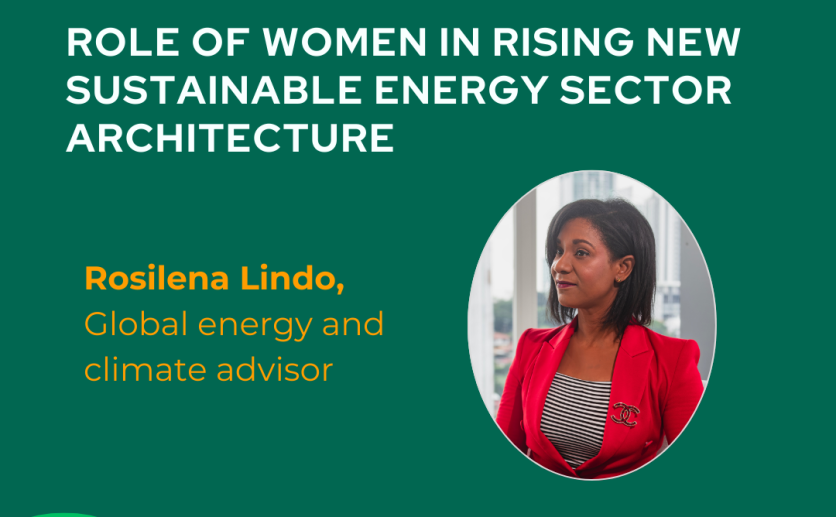
This powerful session with Rosilena Lindo, Global Energy & Climate Advisor and former National Energy Secretary of Panama, explores why gender equality is at the heart of a just energy transition and how inclusivity can accelerate progress toward net zero emissions by 2050.
Moderator: Prasadini Wickramasinghe, Energy Analyst – Greenstat Hydrogen Sri Lanka
Rosilena, a globally recognised leader in renewable energy and climate policy, shares her insights on:
Why the energy transition is only achievable when women and men have equal opportunities inside and outside the sector.
How inclusive innovation drives diversification of sustainable energy technologies.
Why the next five years are critical to consolidating a new sustainable energy sector architecture, demanding radical collaboration.
💡 One point that truly stood out:
“Talent doesn’t have a gender. To triple renewable energy by 2030, we need ALL the talent — women and men — at the table.”
This is a powerful reminder that the energy transition is not just about technology—it’s about people. To build a greener, more just future, we must break biases, open opportunities, and ensure women have equal space in leadership, innovation, and decision-making.
The webinar also highlights how green hydrogen, renewable energy jobs, and capacity building can unlock opportunities for millions—if equality and inclusivity are embedded at every step.
👉 Watch the full recording now and be part of the global clean energy community shaping a just and sustainable future.

